


National Geographic 1989 November
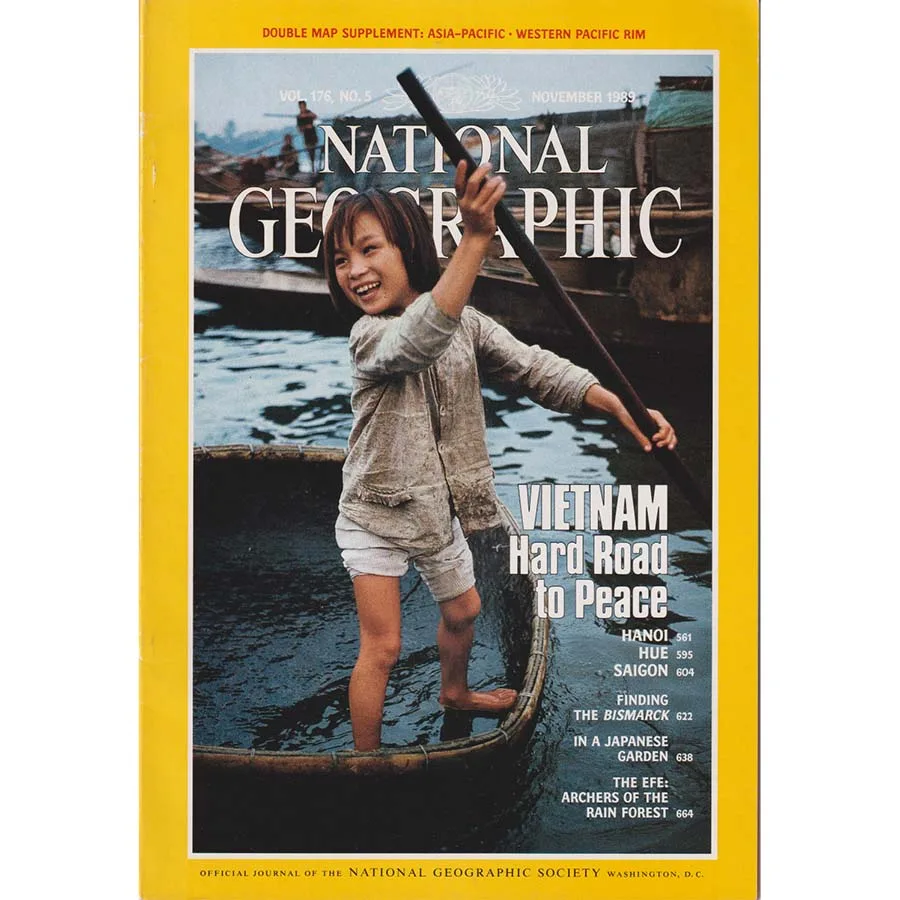
Publisher: National Geographic
Format: Paperback
ISBN: none
National Geographic, November 1989: the issue that shows up with a bright yellow border and the quiet confidence of a magazine that can give you geopolitics, shipwreck obsession, rainforest archers, and a Japanese garden… and still have room for a double map the size of your dining table.
The cover story, Vietnam: Hard Road to Peace, is a beautifully blunt title for a subject that is anything but simple. The image is all life and motion: a child balancing in a round boat, grinning, oar raised like a flag of pure stubborn optimism. It’s that classic Nat Geo move—start with a human moment that disarms you, then lead you into the deeper layers: recovery, memory, rebuilding, and what “peace” actually means when it arrives in slow increments rather than fireworks. It’s 1989, the world is shifting, and the magazine is doing what it does best: looking closely, listening longer, and trying to capture a country as more than a headline.
And because National Geographic can’t resist giving you a full itinerary, the Vietnam feature flags the big names—Hanoi, Hue, Saigon—like stamps in a passport that comes with a history lesson. Expect streets, river life, markets, scars, resilience, and the peculiar feeling you get reading older reportage: you can see the future coming, but the writers can’t, and that makes every observation feel extra poignant.
Now—if you’re the sort of person who buys Nat Geo partly for the stuff you can unfold—this issue obliges with a Double Map Supplement: Asia-Pacific / Western Pacific Rim. Which is Nat Geo speak for: “Here, have a paper-based sense of scale, and then spend 20 minutes trying to fold it back to its original dimensions while losing your dignity.” It’s glorious. It’s tactile. It’s the pre-GPS version of feeling powerful.
The supporting cast is also peak late-80s National Geographic eclecticism:
-
Finding the Bismarck – because humans cannot leave famous wrecks alone. We must locate them, film them, narrate them solemnly, and feel feelings about steel resting quietly in the deep. It’s underwater archaeology as emotional theatre.
-
In a Japanese Garden – a tonal palate cleanser that’s all design, stillness, and the kind of beauty that looks effortless while actually requiring obsessive care. It will make you briefly want to rake gravel and fix your life.
-
The Efe: Archers of the Rain Forest – a reminder that there are worlds within worlds, and that “technology” isn’t just gadgets; it’s knowledge, skill, and surviving brilliantly in places that would eat most of us alive before lunch.
Condition: Good, which is perfect: solid, readable, and still carrying that late-80s Nat Geo heft—long articles, serious photography, and the confidence that you’ll happily spend an evening with paper rather than a screen. Sold by Crappy Old Books, naturally, because the best way to buy a thoughtful issue about Vietnam’s path to peace, a legendary shipwreck, Japanese serenity, rainforest mastery, and an enormous Pacific map is from a seller whose name suggests a cheerful rummage through history.
If you like your magazines with heart, scope, and at least one fold-out that requires furniture rearrangement—this one’s a belter.
Keep browsing: See more National Geographic books Other books by National Geographic
